- ZHUHAI JIALI HARDWARE CO.,LTD.
- +86-756-8586520

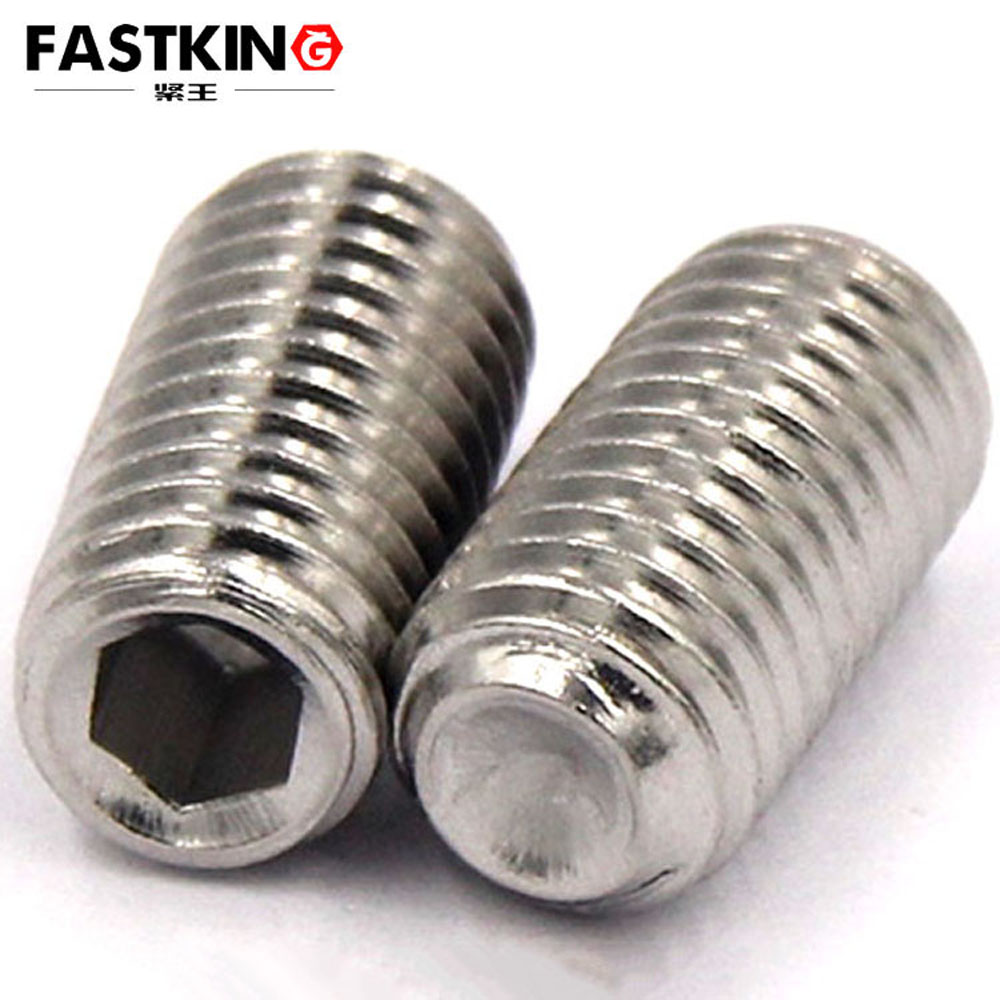
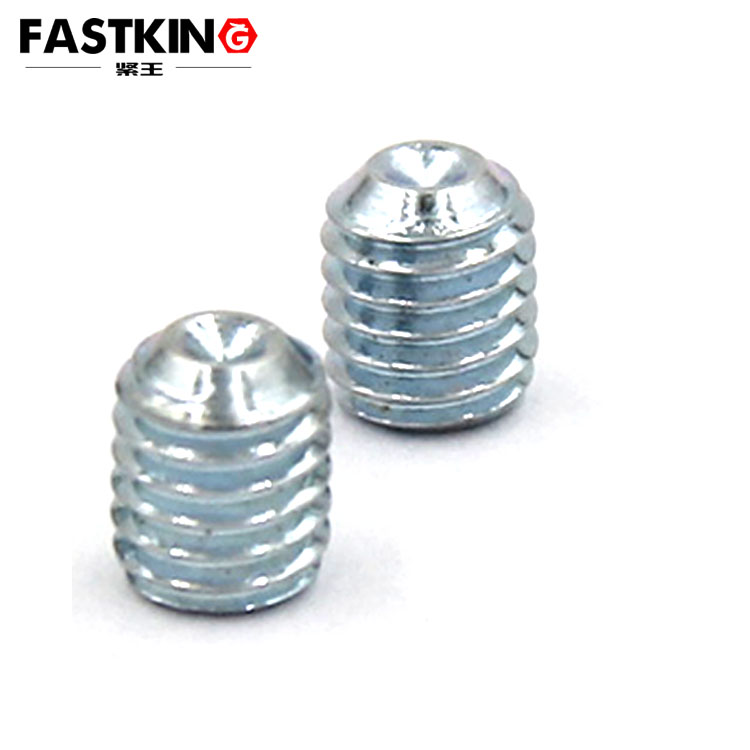
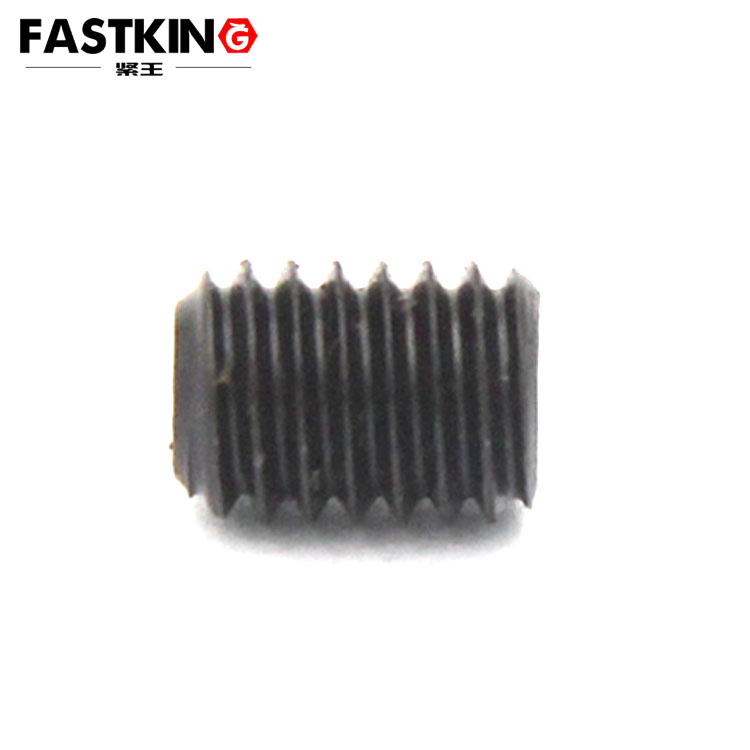
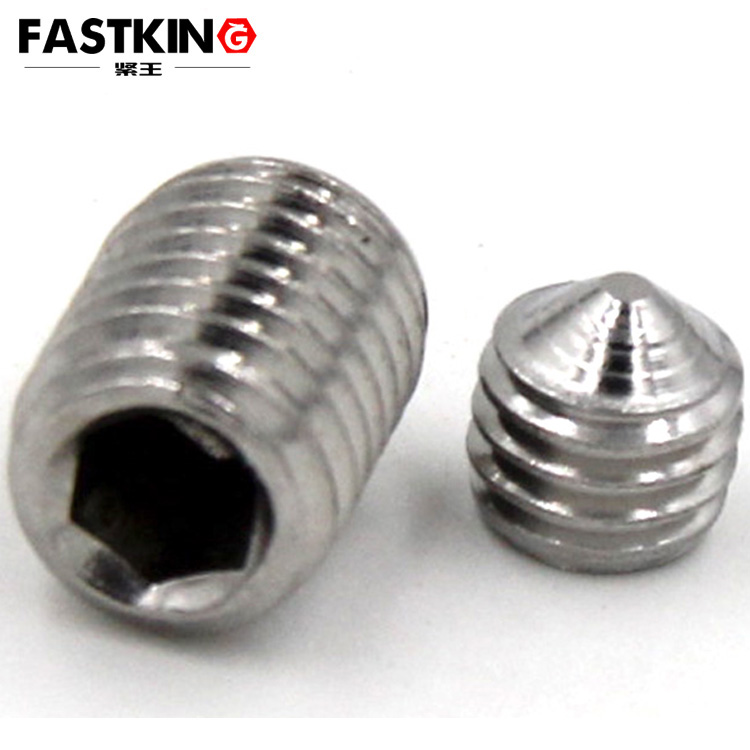
Flat end set screw ASME b18.3
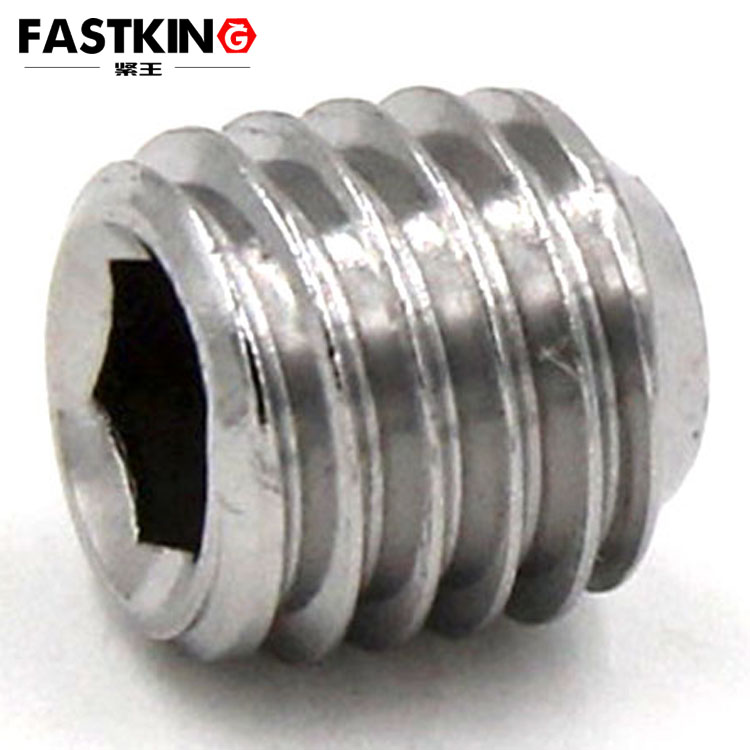
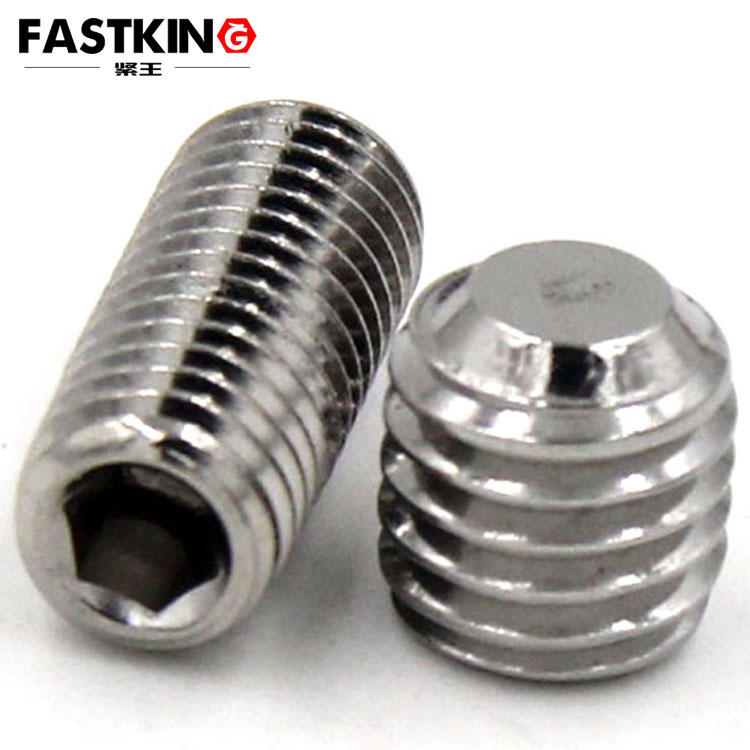
- Product description:Flat end set screw, also known as machine screw, set screw, head end is flat end.
Flat end set screw ASME b18.3
Material: stainless steel 304316, grade 8.8 high strength and grade 12.9 high strength
Product standard:ASME b18.3
It can also support non-standard customization.
In the "precision positioning" segment of the fastener family, the hexagon socket flat-point set screw (also known as Grub screw or set screw) is a core member that combines practicality and protectiveness. With GB/T 77 as its manufacturing standard, it features an ingenious design of a hexagon socket head and a flat-point tail. This design not only addresses the pain points of traditional fasteners—such as easy damage during operation and surface scratches—but also adapts to hard surfaces and scenarios requiring frequent adjustments. It has become an indispensable "invisible fastener" in fields like mechanical manufacturing, automotive engineering, and precision instruments. Its "small yet refined" characteristics perfectly meet the dual demands of modern industry for fastening precision and part protection.
From the perspective of core definition and standard positioning, the essence of the hexagon socket flat-point set screw is a fastener that "achieves relative fixation of parts through tightening force". Different from the "connecting function" of bolts and the "substrate anchoring function" of expansion anchors, it focuses more on "gap-free positioning"—by means of close contact between the screw tail and the fixed part, it restricts the axial or radial displacement of shaft-like and sleeve-like parts, ensuring stable part positions during equipment operation. As the national executive standard for this product, GB/T 77 standardizes product consistency from the root: the standard clearly specifies that the nominal thread diameter ranges from M1.6 to M20, with thread pitches divided into coarse and fine (e.g., M5 has a coarse pitch of 0.8mm and a fine pitch of 0.5mm), and the total length of the screw varies from 2mm to 100mm. It also sets clear requirements for materials (recommended carbon steel, stainless steel, alloy structural steel), surface treatments (galvanizing, passivation, black oxide coating), and mechanical properties (tensile strength, hardness). For instance, carbon steel materials must meet the Grade 8.8 strength class, and stainless steel materials must comply with the A2-70 corrosion resistance standard—providing a unified basis for different industries to select suitable products.
The core competitiveness of the hexagon socket flat-point set screw stems from the dual structural optimization of its "hexagon socket head + flat-point tail", with each design targeting practical pain points in industrial scenarios. First, the hexagon socket head: unlike traditional slotted or Phillips screws, the regular hexagonal recess on its head forms a "surface contact" fit with a hexagon socket wrench, rather than the "line contact" of slotted screws. This design offers two key advantages: first, "damage prevention"—traditional screwdrivers tend to cause slot damage (commonly known as "stripping") due to offset force application, while the fit between the hexagon socket wrench and the recess reaches over 90%, ensuring even force application and no slippage. Even after repeated disassembly, the head remains intact; second, "easy operation"—the hexagon socket wrench can reach narrow spaces via a socket extension rod, adapting to compact installation environments such as motor housings and gearboxes. This solves the problem of "space limitation and difficult force application" with traditional screwdrivers. For example, when fixing the shaft and gear of a small motor, workers only need a 5mm hexagon socket wrench to tighten it inside the motor housing without disassembling the equipment casing.
Next, the design ingenuity of the flat-point tail: the screw tail adopts a flat end face structure, instead of the arc shape of a cup-point or the cone shape of a pointed set screw. This detail makes it a "protector of part surfaces". When the screw tightens against the fixed part, the flat-point tail transmits tightening force through "surface contact", dispersing pressure over a larger contact area. This avoids surface indentations and scratches on parts caused by concentrated stress at the tip, making it particularly suitable for hard metal surfaces (such as quenched machine tool guideways and stainless steel sleeves). More importantly, the "non-engagement" feature of the flat-point tail makes it suitable for scenarios requiring frequent adjustments—for example, in the roller positioning of printing equipment, the roller spacing needs regular fine-tuning to ensure printing accuracy. If a cup-point set screw is used, its tail tends to form "engagement marks" on the roller surface, leading to gap deviations after adjustment; in contrast, the flat-point set screw maintains a smooth part surface during tightening and loosening, ensuring positioning accuracy even after repeated adjustments and significantly reducing equipment maintenance costs.
In terms of application scenarios, the hexagon socket flat-point set screw (GB/T 77) has penetrated key links in industrial manufacturing thanks to its advantages of "damage prevention + adaptive adjustment". In the mechanical manufacturing field, it serves as a "positioning lock" for machine tool spindles and bearing sleeves: M8-sized screws tighten against the spindle shoulder to restrict the axial movement of the bearing sleeve, and the flat-point design prevents scratches on the quenched spindle surface; in the automotive industry, the positioning of synchronizer gears in gearboxes relies on M6 stainless steel flat-point set screws—their corrosion resistance adapts to the lubricating oil environment inside the gearbox, and the flat-point tail protects the gear tooth surface during gear fine-tuning; in the precision instrument field, M3 fine-pitch screws are commonly used to fix lens brackets of optical equipment—the hexagon socket head allows precise force application inside the lens cavity, and the flat-point tail avoids damage to the lens metal base; in the home appliance field, M4 galvanized screws are used for the adjustment components of washing machine drum bearings—the flat-point design enables easy fine-tuning of bearing clearance with a wrench even after long-term use by users, solving the problem of drum noise.
It is worth noting that to fully utilize the performance of the hexagon socket flat-point set screw, the "principle of adaptability" must be followed: during selection, materials should be chosen based on the hardness of the fixed part (alloy structural steel for hard surfaces, carbon steel for ordinary surfaces); screw length should be determined according to installation space (ensuring the tail tightening depth is at least 1.2 times the nominal thread diameter); during installation, a hexagon socket wrench matching the head size should be used (e.g., a 3mm wrench for M5 screws) to avoid damage to the head recess caused by mismatched wrench sizes. Meanwhile, the standardized production under GB/T 77 facilitates product selection—screws of the same specification from different manufacturers are interchangeable, reducing supply chain management costs.
From the perspective of industrial development, the design evolution of the hexagon socket flat-point set screw (GB/T 77) reflects the upgrading trend of fasteners from "simple fixation" to "precision protection + convenient maintenance". It lacks the strong anchoring capacity of expansion anchors and the versatile connectivity of threaded rods, yet it is irreplaceable in segmented scenarios due to its precise adaptation to "part protection" and "adjustment needs". Whether protecting the surface integrity of high-precision parts or simplifying equipment maintenance processes, it stands as a "low-key yet practical" representative, laying a solid foundation for the stable operation and efficient maintenance of modern industrial equipment, and becoming a typical example of "succeeding through attention to detail" in the fastener family.